

Trading differs from gambling by relying on strategy, analysis, and risk management instead of chance and impulsive decisions. Traders use data, market trends JQK Slot, and disciplined planning to increase favorable outcomes. Risk controls like stop-loss orders protect capital, setting trading apart as a strategic activity. Both involve uncertainty and capital risk, but traders seek control and sustainability, while gamblers often embrace unpredictability and immediate rewards. Further exploration reveals how skill, mindset, and risk management distinctly shape trading outcomes.
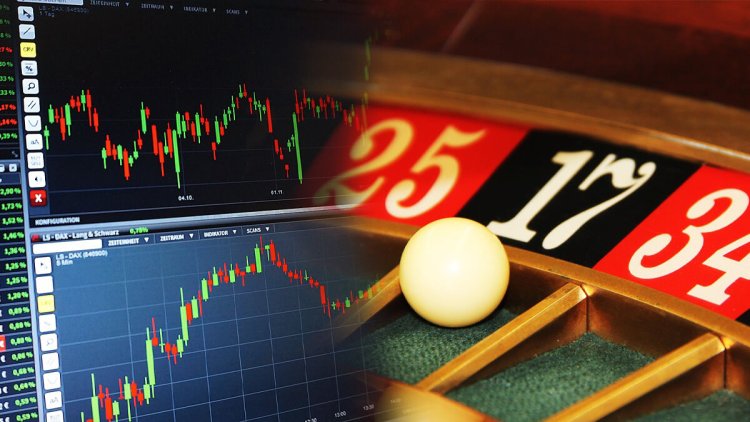
Why Trading Is Different From Gambling
In distinguishing trading from gambling, it is essential to take into account the role of strategy and information. Trading relies on analysis, data, and market trends to make informed decisions, allowing individuals to manage risks and increase the probability of favorable outcomes JQK. Unlike gambling, where chance dominates and outcomes are largely unpredictable, trading involves skillful interpretation of available information to identify opportunities.
Traders exercise control over their actions through research, planning, and disciplined execution, which fosters a sense of empowerment and autonomy. This strategic approach aligns with the desire for freedom, as traders can develop methods tailored to their goals rather than leaving results to pure luck. Consequently, trading is a deliberate activity grounded in knowledge, contrasting sharply with the randomness inherent in gambling.
How Trading and Gambling Are Similar
Both trading and gambling involve risking capital with the hope of financial gain, creating an inherent uncertainty in outcomes. Both activities expose participants to market volatility or odds, where the result depends heavily on chance.
In both, the potential for significant profit can be accompanied by equally substantial losses, underscoring the risk involved. The allure of quick financial rewards can drive individuals toward impulsive decisions, reflecting human tendencies toward risk-taking.
Additionally, both trading and gambling offer opportunities for individuals to exercise autonomy over their choices, appealing to those who value freedom in managing their own capital. Despite differing contexts, the shared elements of risk, unpredictability, and the possibility of reward link trading and gambling inherently, making their comparison relevant for those seeking financial independence.
How Trading Uses Skill and Analysis Differently
Applying skill and analysis distinguishes trading from mere chance by grounding decisions in data and strategy. Traders evaluate market trends, economic indicators, and historical patterns to identify opportunities, relying on research rather than luck. This analytical approach enables them to make informed choices aligned with their financial goals and risk tolerance.
Unlike gambling, where outcomes primarily depend on randomness, trading demands continuous learning, adapting to new information, and applying critical thinking. Mastery of technical tools and fundamental analysis equips traders to anticipate market movements with greater accuracy. This disciplined process fosters autonomy, empowering individuals to shape their financial futures deliberately rather than leaving success to fortune.
Through skillful analysis, trading becomes a purposeful pursuit of freedom, contrasting sharply with the unpredictability inherent in gambling.

Why Risk Management Sets Trading Apart
While skill and analysis guide trading decisions, managing the risks associated with those decisions fundamentally separates trading from gambling. Effective risk management involves setting clear limits on potential losses, diversifying positions, and using tools like stop-loss orders to protect capital.
Traders consciously control exposure, ensuring no single event jeopardizes their entire portfolio. This disciplined approach enables sustainable growth and preserves freedom by minimizing catastrophic losses.
In contrast, gambling typically lacks structured mechanisms to limit downside, often relying on chance without safeguards. Risk management empowers traders to navigate uncertainty with calculated caution, transforming trading into a strategic endeavor rather than a reckless bet. This distinction underscores trading’s potential as a means to achieve financial independence, rather than a mere game of luck.
How Traders’ and Gamblers’ Mindsets Differ
In examining decision-making approaches, traders and gamblers exhibit fundamentally different mindsets that shape their actions and outcomes.
Traders approach the market with discipline, relying on analysis, strategy, and risk management to make informed choices. They accept uncertainty but seek to control exposure and optimize potential returns.
Gamblers, conversely, often embrace chance and unpredictability, driven by hope or emotion rather than systematic evaluation. Their decisions tend to be impulsive, focusing on immediate wins rather than sustainable gains.
This contrast highlights how traders pursue freedom through control and preparation, while gamblers risk freedom by surrendering to luck and impulsivity. Understanding these mindset distinctions clarifies why trading, grounded in strategy, differs fundamentally from gambling’s reliance on chance.
Conclusion
Trading and gambling share inherent risks and uncertainty, yet they fundamentally differ in approach and intent. Trading relies on skill, analysis, and disciplined risk management to make informed decisions, whereas gambling often depends on chance and luck. The mindset of traders emphasizes strategy, planning, and controlled risk, contrasting with gamblers’ tendency toward impulsivity and hope. Understanding these distinctions clarifies why trading is a calculated financial activity rather than mere gambling.